Posted: 14th August, 2026
Indoor vs Outdoor Warehouse Wi-Fi Equipment: What’s the Actual Difference?
Published by Wi-Net Connect | Warehouse Wi-Fi Specialists
When you’re specifying Wi-Fi for a warehouse, you’ll quickly run into a decision that sounds simple but has real cost and performance implications: do you need indoor access points, outdoor-rated ones, or a mix of both? The wrong choice leaves you either paying a premium for hardware you don’t need, or installing equipment that fails within a year because it wasn’t built for the conditions.
This guide explains the genuine differences between indoor and outdoor warehouse Wi-Fi equipment, when each is the right call, and how the costs compare, so you can make a confident, evidence-based decision.
It’s Not Just About Being Inside or Outside
The obvious assumption is that indoor equipment goes indoors and outdoor equipment goes outside. That holds most of the time, but the more useful way to think about it is environmental exposure. Outdoor-rated access points are engineered to survive conditions that would quickly degrade or destroy standard indoor hardware: temperature extremes, moisture, dust, and physical knocks.
Plenty of warehouse spaces are technically indoors but environmentally harsh, and that’s where the decision gets interesting.
What Makes Outdoor Equipment Different
Outdoor-rated access points differ from indoor units in several meaningful ways. They carry a higher ingress protection rating, sealing them against dust and water. They operate across a much wider temperature range, so they keep working in freezing loading bays or sweltering summer roof spaces. Their enclosures are built to resist impact and corrosion, and they often support external antennas for directional coverage over long distances or wide yards.
All of this ruggedisation costs more. An outdoor-rated access point typically carries a noticeably higher price than its indoor equivalent, and the mounting hardware, cabling, and weatherproofing add to the total. That premium is entirely justified in the right setting, and entirely wasted in the wrong one.
When You Need Outdoor-Rated Equipment
Outdoor-rated hardware earns its cost in specific scenarios. Loading docks and yard areas are the most obvious: forklifts moving stock between the building and external trailers need continuous coverage, and equipment mounted at the dock face is exposed to weather every time the doors open. Cold storage and chilled warehousing are another clear case, because standard indoor access points are not rated to operate reliably at sub-zero temperatures, and a freezer environment will cause condensation and failure in hardware not built for it.
External yards, container parks, and open-sided buildings also call for outdoor equipment. Anywhere devices need to connect while genuinely outside, or in a space open to the elements, the ruggedised option is the reliable one. The same applies to dusty or high-particulate environments, where sealed enclosures protect the electronics that standard vented units would leave exposed.
A real example: a distribution centre with a heated main floor but an unheated loading bay tried to cover both with standard indoor access points. The bay units failed within a single winter as condensation built up inside them. Replacing just those positions with outdoor-rated hardware cost more per unit but ended the repeat failures, and the callouts that came with them.
When Indoor Equipment Is the Right Choice
For the majority of warehouse floor space, meaning the main picking, storage, and dispatch areas in a climate-controlled building, indoor access points are the correct and cost-effective choice. They deliver strong wireless performance for a lower price, and there’s no benefit to over-specifying hardware for an environment that doesn’t demand it. A heated, dry, enclosed warehouse floor doesn’t need ruggedised equipment, and paying for it there simply inflates your project cost without improving coverage or reliability.
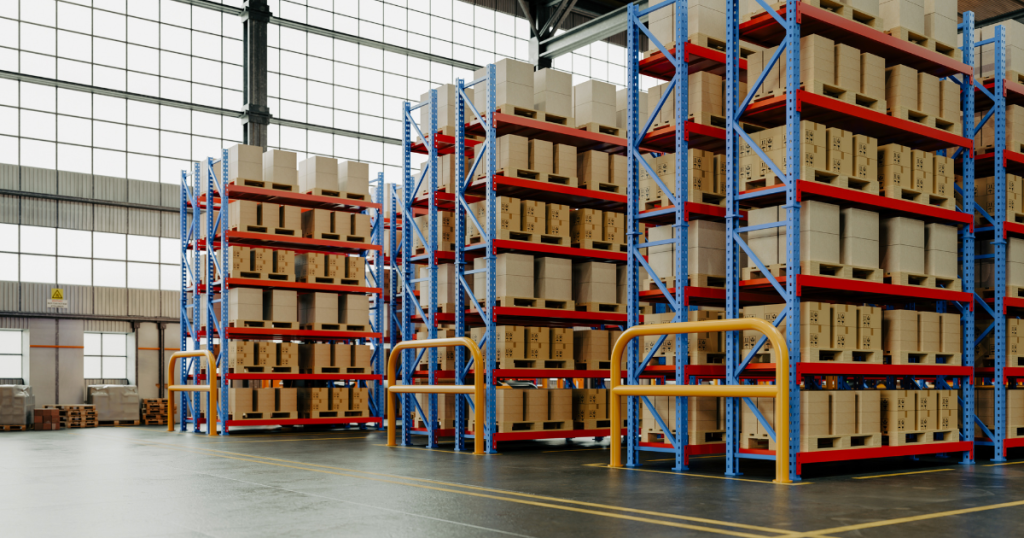
There is one important exception, and it’s the most common reason we reach for external hardware indoors: high rack bays. Tall, densely packed storage aisles behave like long, narrow corridors, and a standard omnidirectional indoor access point wastes much of its signal into the surrounding racking rather than sending it down the aisle where devices actually are. A directional antenna aimed along the bay gives far better penetration and a more reliable connection deep into the storage run. The catch is that this directional capability often sits in outdoor-rated hardware rather than the standard indoor range, so you end up specifying an outdoor-rated access point for what is genuinely an indoor job. The decision here is driven by antenna type and coverage shape, not by weather exposure.
This is a good example of why the label on the box matters less than the coverage the site needs. The right answer isn’t always the obvious one, which is exactly why a proper design assessment is worth doing before any hardware is ordered.
The Mixed Approach Most Warehouses Actually Need
In practice, most warehouses aren’t a single environment. A typical site has a climate-controlled main floor, one or more loading bays exposed to the weather, perhaps a chilled section, and an external yard. The right design rarely uses one type of equipment throughout. It matches the hardware to each zone.
This is exactly why a proper design consultation matters. Rather than defaulting to all-indoors and hoping the exposed areas cope, or over-specifying everything as outdoor-rated to be safe, a zone-by-zone assessment puts the right equipment in the right place. You get reliable coverage everywhere without paying an outdoor premium on hardware that will spend its life in a warm, dry aisle.
Install and Assure: Getting It Right and Keeping It Right
Choosing the right equipment is the start, not the finish. Warehouses change. A new chilled section, an extended yard, or a reconfigured dispatch area can each shift what a given zone needs. The strongest approach designs coverage around your current environment, installs the appropriate mix of hardware, and then continues to assure performance as your site evolves. That way the equipment decision made today still holds up as your operation grows.
Not Sure Which You Need?
Request an equipment recommendation and design consultation from Wi-Net Connect. We’ll assess your environment zone by zone and recommend the right hardware for each area, so you get dependable coverage without over-spending on kit you don’t need.
Call us: 02036 970246 | Email: info@wi-netconnect.co.uk